
• Only registered members can see all the forums - if you've received an invitation to join (it'll be on your My Summary page) please register NOW!

  • If you're looking for the LostCousins site please click the logo in the top left corner - these forums are for existing LostCousins members only.
  • This is the LostCousins Forum. If you were looking for the LostCousins website simply click the logo at the top left.
  • It's easier than ever before to check your entries from the 1881 Census - more details here

Date Formats used by GEDCOM and others supported by FTA

Tim

Megastar and Moderator
Staff member
The GEDCOM standard has defined the format of dates to allow this information to be passed between Family History Software programs or Analysis Tools like FTAnalyzer.

Even though there is a standard, most FHS allow users to add any date format they want to. This might make sense to the users as they enter the dates but makes it very difficult if you ever need to transfer your tree to another FHS or to use Analysis Tools like FTA.

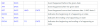
Here is a list of the date formats from the GEDCOM Specification. All formats in blue are the preferred option and should be used before creating a non standard format.

In the following examples DATE can be in any of the following formats

upload_2015-4-21_12-53-12.png

To build up a range of dates, the following are used
upload_2015-4-21_12-53-51.png

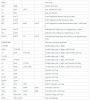
Because FHS programs don’t enforce users to adhere to the GEDCOM standards, FTAnalyzer can detect and interpret the following date format variations.
upload_2015-4-21_12-55-2.png
 
Last edited:
FTAnalyzer also copes with minor variations of the above which are a bit more unusual eg: "> 1881" which gets converted to AFT 1881. If users have other common date formats that aren't being recognised it might be possible for me to add support for them. Dates are after all at the core of recording family history information. Let me know of any common formats that are missing by raising an issue here.
 
Thank you very much, Tim and Alexander. However - you don't mean, do you, that dates should always be written in capital letters? I hope this isn't a stupid question, but I do want to get things right.
 
That made me think, had to go and check my tree! It looks like it doesn't have to be in caps :)
 
Is there no GEDCOM standard for approximate dates? eg C1790 or ABT1790
C1790 is not allowed but ABT 1790 is.

However people tend to use more "absolute" terms. By this I mean BEF 1790 means a date BEFore 1790, AFT 1790 means a date AFTer 1790.

ABT 1790 means it could be before or after 1790, and is therefore less descriptive.
 
OK, thanks Tim. I think I have mostly used approximate dates when estimating a date of birth from a census or an age at death/burial. In such circumstances, particularly when the information has been given by a third party, it's not always possible to be more precise.

A quick glance at my FH program shows I have used C rather than ABT - oh well, something else to add to add to my ever expanding To Do list. :eek:
 
I have also used abt when estimating a date of birth etc. As Pauline says, you often can't know whether it was bef or aft. I've also used it when entering a date (year only) gleaned from the General Register Office index. I suppose I should have used an abbreviation with quarter right from the word go but I didn't, and the thought of going through and changing my hundreds and hundreds of entries fills me with despair.
 
Last edited:
I always use ABT for birth dates when its estimated from census or death. FTAnalyzer then adds a range up to a year/quarter/month before and to the end of the year/quarter/month. eg: if someone says that they are 52. You can say their birth date is ABT 1963. This could be back to 1962 or could be as late as 31st Dec 1963. You don't know if they've just had a birthday or not. Cake crumbs might be a give away of course :)

Pauline the GEDCOM standard for Circa is CIR which is treated the same way as ABT in FTAnalyzer. However in light of the comment you made I've updated FTAnalyzer so that dates that start C1, C2 or C 1, C 2 will be understood to mean CIRca. So that's something you can score off your to do list.
 
Last edited:
There's no need to worry about this. (excuse the pun) ABT is valid to use with a date. And there's also no real need to change what you have.

I also use approximations when adding a DOB, rather than have parents with blank DOB's, if I find a christening record then I tend to add a date that is about 18 years before the christening date, so if the christening date was 1808, I would add BEF 1790 for the parents. As I find more children then I can revise the date by changing it to BEF 1784 etc. This doesn't assume that they were born in 1784, but they were born before 1784.
 
Hmm yes I saw I'd got a conversion for CIR so assumed I'd got that from the standard without actually checking it. It looks like it is a Brother's Keeper invention (perhaps others too).
 
I've released v5.0.1.4 with all those date fixes and several fixes with issues I'd not seen before that were highlighted by loading Gillian's tree. eg: dates with years pre 1000!!
 
Oh my goodness, I think that date pre 1000 must have come from my notes somewhere. I truly don't believe I have any dates that ancient in my regular family pages.
 
Oh my goodness, I think that date pre 1000 must have come from my notes somewhere. I truly don't believe I have any dates that ancient in my regular family pages.
Hi Gillian, No I think its a date error you have as it was an exact date that ended 197. So I think it should have been a 1970s date but was missing the last digit. It would show up in date errors as being before someone was born, or someone was too old to have been the child of a parent etc.
 
Back
Top