• Only registered members can see all the forums - if you've received an invitation to join (it'll be on your My Summary page) please register NOW!

  • If you're looking for the LostCousins site please click the logo in the top left corner - these forums are for existing LostCousins members only.
  • This is the LostCousins Forum. If you were looking for the LostCousins website simply click the logo at the top left.
  • It's easier than ever before to check your entries from the 1881 Census - more details here

US 1880 Census

peter

Administrator
Staff member
For this census we use the NARA film/roll number and the page number (actually a folio number).

Unfortunately FamilySearch seem to have ditched the roll number and some Ancestry users are finding that it has also disappeared (although I can see it whether I use Ancestry.com or Ancestry.co.uk).

The only reliable source of the film/roll number now seems to be Findmypast - but they don't give the page number.

Can you still see the film/roll number t Ancestry? I'm worried it might disappear for all of us. Here's what I see t the moment:

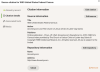
upload_2024-11-9_11-3-57.png
 
I can see it in the Citation details, but I think that's where it's always been - Roll numbers on US Censuses don't generally appear in the "details" section in my experience.
(Just to keep in mind, I don't search US censuses on FamilySearch or FindMyPast, only Ancestry)

I was using "Ancestry.com.au" for that.
 
Looking at one example on Ancestry.co.uk, I can see the same format of Source tab as that shown above.
 
I can see it in the Citation details, but I think that's where it's always been - Roll numbers on US Censuses don't generally appear in the "details" section in my experience.
I agree, the roll number has been under source citation for as long as I can remember (although there wasn't always a separate Source tab); that's why it is such a surprise that it seems to be disappearing.

So far it looks as if the change only affects US users of Ancestry - though of course they're the ones most likely to be entering relatives from the US 1880 census at LostCousins.
 
Heree is an example of the new format:

upload_2024-11-10_11-21-54.png
 

Attachments

  • upload_2024-11-10_11-22-21.png
    upload_2024-11-10_11-22-21.png
    78.6 KB · Views: 6
Like Stuart, I can still see the 'old' style source information on ancestry.co.uk.

I appreciate that the immediate concern here is for cross-referencing census entries on Lost Cousins, but I also find that it is in general increasingly difficult to give citations that refer to actual documents in archives. I sometimes have to ask archivists for the information, because not everything is detailed in published catalogues, and even they don't always 'get' why I need a reference when 'you can just search for it on Ancestry / FMP / etc'. I want to have a reference that will enable any reader of my historical narrative to locate and view the original evidence, should they wish to, without having to go through the same complex search process that led me to it. Also, without necessarily having the use of whichever website is hosting it at the time (I do also say if I have accessed the document via a website, and which one, but there is no guarantee that the same site will still have that data at a later date). I know I'm getting old, but even if records are held digitally, we still need them to have unique references that we can all use to access them?
 
When documents have been microfilmed or digitized researchers are generally expected to refer to those 'copies' rather than the original documents - you have to have a jolly good reason to see the originals.

Unfortunately, even if the companies that digitize the records record the archive references, they may not allow us to search using those references. FamilySearch is the prime culprit, but Ancestry and Findmypast are also guilty to a lesser extent.
 
When documents have been microfilmed or digitized researchers are generally expected to refer to those 'copies' rather than the original documents - you have to have a jolly good reason to see the originals.

Unfortunately, even if the companies that digitize the records record the archive references, they may not allow us to search using those references. FamilySearch is the prime culprit, but Ancestry and Findmypast are also guilty to a lesser extent.
Yes, I didn't mean to enable access to the original record if it has been filmed or digitised, nor even to be able to search microform or digital records using the references, but to be able to identify that a specific record is the one being cited as evidence.
 
Yes, I didn't mean to enable access to the original record if it has been filmed or digitised, nor even to be able to search microform or digital records using the references, but to be able to identify that a specific record is the one being cited as evidence.
Hear hear - a couple of hundred years and there might not even be an internet. (And Ancestry, by the way, are often inaccurate with their references.)
 
a couple of hundred years and there might not even be an internet.
It may be called something different, but there will be a means of transmitting digital information. How else could it be possible to access records?
 
Well... it may not be possible... how can we be sure?
In any event, many of us will have experienced the case of the disappearing record set, presumably because a license agreement has expired. I've always been very glad to have noted the original repository and archive reference in such cases.
 
In any event, many of us will have experienced the case of the disappearing record set, presumably because a license agreement has expired. I've always been very glad to have noted the original repository and archive reference in such cases.
Which brings us back to my original point, that FamilySearch are no longer providing this information for some of their record sets, and it would appear that Ancestry are headed in the same direction (at least so far as the US 1880 census is concerned).
 
Back
Top