• Only registered members can see all the forums - if you've received an invitation to join (it'll be on your My Summary page) please register NOW!

  • If you're looking for the LostCousins site please click the logo in the top left corner - these forums are for existing LostCousins members only.
  • This is the LostCousins Forum. If you were looking for the LostCousins website simply click the logo at the top left.
  • It's easier than ever before to check your entries from the 1881 Census - more details here

DNA cM across segments

SLJ

LostCousins Member
I really don't understand how DNA works in relation to cousins and relationship position.
How can I share only 32 cM across 2 segments with A my 3rd cousin and then more, 67 cM across 3 segments with B a more distant cousin. I know exactly/all which ancestors they come through.
Looking at Peters coloured relationship chart, A is my 3rd cousin and B is my 4th cousin. In my logic surely I should share more DNA with a closer cousin. I really don't understand. Can someone please help.
To make it even more confusing FTM has cousin B, as my 3rd cousin 1 x removed?
 
How much DNA we share with any particular relation will depend on how much DNA we have each inherited from our common ancestors. So we may well share a lot more - or conversely, a lot less - DNA with a cousin than, on average, we might expect to.
 
How much DNA we share with any particular relation will depend on how much DNA we have each inherited from our common ancestors. So we may well share a lot more - or conversely, a lot less - DNA with a cousin than, on average, we might expect to.

So does this mean that the 3x great grandparents, two sons on my dads side passed more DNA down the line to my 4th cousin, than my 2x great grandparents, two daughters on my mothers side to my 3rd cousin?
 
How much DNA we share with any particular relation will depend on how much DNA we have each inherited from our common ancestors. So we may well share a lot more - or conversely, a lot less - DNA with a cousin than, on average, we might expect to.
It's only partly a question of how much we have inherited from the common ancestors - the biggest factor is whether it is the same segments that our cousin inherited.

There's a coloured chart in my Masterclass which has all the information you need.
 
It's only partly a question of how much we have inherited from the common ancestors - the biggest factor is whether it is the same segments that our cousin inherited.
Yes, I agree - I didn’t express that clearly.
 
It's only partly a question of how much we have inherited from the common ancestors - the biggest factor is whether it is the same segments that our cousin inherited.

There's a coloured chart in my Masterclass which has all the information you need.

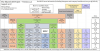
The coloured chart below is the one I have been looking at.
 

Attachments

  • DNA map of relations.png
    DNA map of relations.png
    437.2 KB · Views: 9
That is the chart I'd assumed you were referring to but I'm not sure exactly what it is you don't understand about it. I guess I may have confused you more by not expressing more carefully what I was trying to say in #2.

You can see from the chart that, while on average you might expect to share 74cM with a 3rd cousin and only 35cM with a 4th cousin, the range (which is given below the average figure) shows that there would be nothing untoward in sharing more DNA with a 4th or 5th cousin than with a 3rd.

DNA inheritance is a random process, while relationship predictions are based on averages. So our actual relationship with a DNA match will often vary from the one predicted.
 
The coloured chart below is the one I have been looking at.
You can see from the chart that there is a wide range for every possible relationship, and that it's quite possible to share more DNA with an 8th cousin than a 3rd cousin (or even a 2nd cousin once removed).
 
Quite so. In plenty of cases, I share more DNA with a 4th cousin than a 3rd cousin.
The example I quoted - of sharing more DNA with an 8th cousin than with a 2nd cousin once removed - is from my own tree. The key point is that once you go beyond 2nd cousin there may be no DNA shared (at least, none that is detectable).
 
  • Like
Reactions: SLJ
That is the chart I'd assumed you were referring to but I'm not sure exactly what it is you don't understand about it. I guess I may have confused you more by not expressing more carefully what I was trying to say in #2.

You can see from the chart that, while on average you might expect to share 74cM with a 3rd cousin and only 35cM with a 4th cousin, the range (which is given below the average figure) shows that there would be nothing untoward in sharing more DNA with a 4th or 5th cousin than with a 3rd.

DNA inheritance is a random process, while relationship predictions are based on averages. So our actual relationship with a DNA match will often vary from the one predicted.

Its not the chart that I don't understand, just didn't realise you could share less matches with a close cousin than a distant one. DNA has not worked out for me, as I expected it to. Following the masterclass, the surnames which I have struggled to find more out about, there are no matches, as of yet.
Also I didn't understand is how the chart shows one relationship and the software FTM gives another, which is probably question for another page.
 
I recall Peter either in a Newsletter or in this Forum using a visual display of playing cards to represent the distribution of DNA which I found both entertaining and informative. It might help to resurrect it again.

On a different (but essential the same) tack, on my recent visit back to Birmingham, I made contact with four different female cousins. One a first cousin with whom we stayed whilst we visited a first cousin once removed (now in her 90th year). Then via 'Skype' contact with a second cousin even more elderly and frail (approaching 97) who lives in Italy. This was pre-arranged with her daughter who lives in the UK (with whom I have regular contact) via her sister who lives with her mother in Italy - both second cousins once removed. Not sure if there is a collective name for a group of cousins, but if there is this qualified.

It was only afterwards when my first cousin asked about the likely distribution of DNA amongst them all was I able to quote average statistics (as per Peter's Chart) which in round terms from 1st cousin to 2nd cousin once removed was 12%-6%-3%-1.5%. But then trying to explain that this was merely an average and in practice shared DNA depended on distribution. I remembered the pack of cards explanation and did my best to explain how it came down to the luck of the draw. I think this helped and was certainly much easier than trying to explain cM's and segments.
 
Its not the chart that I don't understand, just didn't realise you could share less matches with a close cousin than a distant one. DNA has not worked out for me, as I expected it to. Following the masterclass, the surnames which I have struggled to find more out about, there are no matches, as of yet.
Testing your DNA is unlikely to hand you the answers you want on a plate. As I wrote in the Masterclass "most of the time the surname of the ancestors you share with a DNA cousin doesn't appear in both trees - indeed, it's quite possible that the surname of your common ancestor doesn't appear in either tree!"

The strategies in the Masterclass are designed to focus attention on the matches that are most likely to produce results. Focusing on your closest matches or your most frustrating 'brick walls', the approaches typically taken by people who haven't had the benefit of reading the Masterclass, aren't good strategies.
Also I didn't understand is how the chart shows one relationship and the software FTM gives another, which is probably question for another page.
The chart DOESN'T show one relationship. Unless you're talking about siblings or parent/child the amount of shared DNA will be compatible with multiple relationships, often 10 or more. Using Ancestry you can click the 'i' icon to see a list of possible relationships, but they won't usually list them all - if the amount of DNA shared is under 75cM there could be dozens of possibilities.
 
I recall Peter either in a Newsletter or in this Forum using a visual display of playing cards to represent the distribution of DNA which I found both entertaining and informative.
I agree, a brilliant demonstration of DNA inheritance, in an easy-to-digest format. It was in the Newsletter of 10th July this year. I remember recommending it to a friend who's recently had her DNA tested and is just starting out in family history research.
 
The chart DOESN'T show one relationship. Unless you're talking about siblings or parent/child the amount of shared DNA will be compatible with multiple relationships, often 10 or more. Using Ancestry you can click the 'i' icon to see a list of possible relationships, but they won't usually list them all - if the amount of DNA shared is under 75cM there could be dozens of possibilities.

Oh dear think there are crossed wires, that's not what I meant, nothing to do with the DNA cM. Obviously too difficult to explain. I'm talking about the relationship someone is to me, through a direct line, no half ancestors. That's why I said it was probably not a question for the DNA page.
 
I agree, a brilliant demonstration of DNA inheritance, in an easy-to-digest format. It was in the Newsletter of 10th July this year. I remember recommending it to a friend who's recently had her DNA tested and is just starting out in family history research.

Thanks I'll have a look for it.
 
Oh dear think there are crossed wires, that's not what I meant, nothing to do with the DNA cM. Obviously too difficult to explain. I'm talking about the relationship someone is to me, through a direct line, no half ancestors. That's why I said it was probably not a question for the DNA page.
Now I understand. Not being an FTM user I just assumed that they had added some DNA features.

I also assumed you were referring to the coloured chart in my DNA Masterclass, since that was what we'd been talking about.

When it comes to documented relationships I always work them out myself, partly because Genopro doesn't do it for me, but also because it provides me with a reason to have a good look at my tree (or, at least, that part of my tree).
 
Back
Top