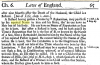
When you draw up a will the aim is to anticipate any possible problems, and avoid them. The issue of leaving bequests to illegitimate children is quite a thorny one (see the book that I reviewed a few months ago), so don't expect wills to be written in plain English, and don't try to read between the lines - the job of a lawyer is to ensure that the meaning is clear and unambiguous.
One of my relatives left a bequest to the illegitimate child of his wife's sister - and was careful not to name the child, probably because he wasn't sure what he should give as the child's surname.
Lambert could be the father's name; it could also be the mother's maiden name, or her mother's maiden name, or the name of the man one of them married - the possibilities are endless because in England we can change our name at will. (As soon I start calling myself by another name it becomes my legal name.)
In summary, Lambert is the surname by which the child was known at the time the will was drafted, and that's all you can be sure of. If the child had another name it would almost certainly have been stated in the will for the avoidance of doubt.
Note: in general where aliases are shown in documents it is usually because the individual was known by different names at the same time, ie some people knew him as AB and others knew him as XY.