
Extract from Peter's Newsletter
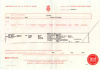
Born in Walthamstow in February 1901, Arthur J Daly was shown as 2 months old on the 1901 Census - you'll find him living with his parents at 370 Forest Road, Walthamstow. His parents were born in Ireland, and his father, a General Practitioner, qualified there in 1898 according to the Medical Register for 1911, which you'll find in the UK Medical Registers, 1859-1959 collection at Ancestry. However Dr Arthur James Daly isn't listed in the 1913 register, which is at Findmypast, and I soon discovered that his death had been registered in the 4th quarter of 1912.
Who knows what the impact was on his five sons, the eldest of whom was only 11 when their father died? Were the family forced into penury, or had adequate provision been made? There is no record of a will in the Probate Calendars for England & Wales, but it's possible that much of his estate was in Ireland. Either way, I don't suppose that young Arthur James Daly had an easy upbringing - though it doesn't excuse what he did later.
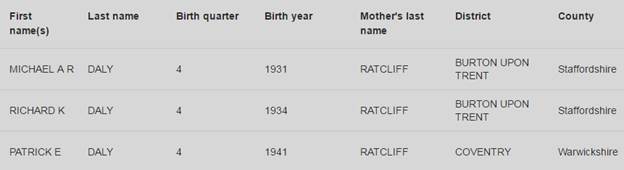
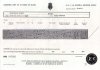
In 1925 he qualified as a doctor and in 1930 he married Lilian Ratcliff, in Burton-on-Trent - she was just 19 years old (he was 29); by 1931 he was working at the Hanwell Mental Hospital in Southall, Middlesex according to the Medical Register, but the births of his sons Michael (1931) and Richard (1934) were both registered in Burton. Were they living apart, or had he found a new job closer to Burton?
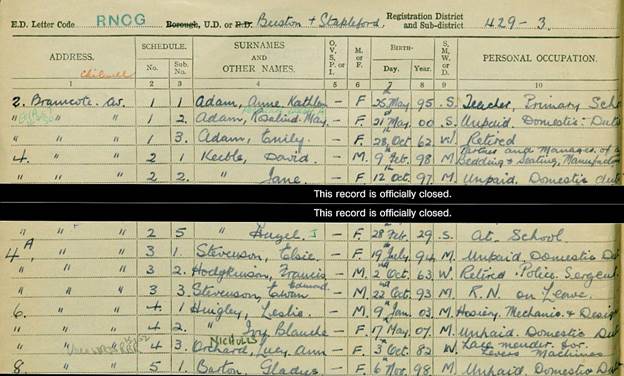
The 1939 Register shows him in General Practice at Ilkeston, Derbyshire - not far from Nottingham:

© Crown Copyright Image reproduced by courtesy of The National Archives, London, England and Findmypast
I don't know when he started using the second middle name of Patrick - it certainly doesn't appear on his birth certificate, on his marriage certificate, or in the medical registers I checked. Perhaps he felt that the initials JP added an extra degree of respectability (since JP is the abbreviation for 'Justice of the Peace', ie a magistrate).
He can't have been very successful as a doctor, nor can he have been practising in Ilkeston for more than a few years - the Derby Daily Telegraph of 25th November 1936 reported bankruptcy proceedings against him, giving his Ilkeston address but describing him as "lately of Adelaide House, Adelaide Street,Accrington". The same newspaper reported on 19th January 1937 that he had debts of £3,250 10s, but assets of only £83 2s 4d - a deficiency of £3,167 (about £500,000 in today's money if the increase in wages since 1937 is taken into account).
There was more bad news to come - on 3rd September 1937 the London Gazette announced that he had been convicted of offences under the Dangerous Drugs Acts, as a result of which his right to possess and supply opiates had been withdrawn.
Clearly he was struggling to make ends meet even after his bankruptcy - on 30th March 1939 the Nottingham Evening Post reported that he had been fined 10s with 30s costs for using a motor car without a Road Fund Licence, and that he had 15 previous convictions. He continued to drive without buying the requisite licence, and on 2nd September 1939 the Post reported that he had been fined £5 with 32s 3d costs.
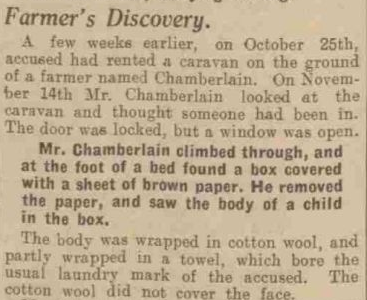
But this was soon to be the least of his worries, for on 20th November 1939 the London Times revealed that he had been remanded in custody, charged with the murder of a new-born infant between 8th-14th November. The Court was told how the body had been found wrapped in brown paper, in a box, in a caravan in a field.
There are extensive articles about the case in the Nottingham Evening Post of 28th February 1940 - it's the lead story on the front page, and on the back page - I'll leave you to read the report yourself (in the British Newspaper Archive); suffice it to say that the deceased infant was the child of his young mistress, who had also been a patient of his. I thought the evidence was pretty damning, and I suspect you will too - but on 1st March the Times reported that he had been found not guilty of murder, and sentenced to a mere three days' imprisonment for concealing the birth of a child. Ironically the pathologist whose evidence saved Dr Daly was Sir Bernard Spilsbury, whose evidence had helped to convict Dr Crippen in 1910.
The medical register for 1943 shows that he was still a registered practioner despite all that had happened, whilst the 5th February 1944 issue of TheChemist & Druggist reported Daly's restoration to the list of authorised doctors under the Dangerous Drugs Act.
Scotland Yard story entitled 'The Blazing Caravan'. Your challenge is to read the key articles which argue the case for and against Dr Daly - we know he was an adulterous bankrupt who broke the ethical code that he signed up to when he became a doctor, but that doesn't make him a murderer.
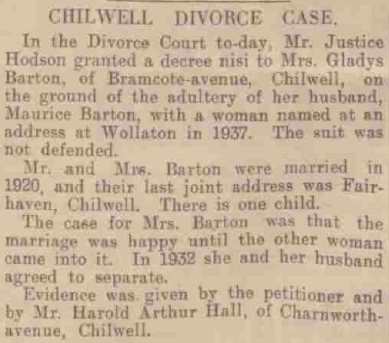
Would it make any difference to your decision if you were to know that the Times of 1st December 1951 reported that a Dr Arthur James Daly of CarrRoad, Nelson, Lancashire had lost his appeal against being struck off the medical register after committing adultery with another patient? He didn't give up - he became the first doctor to take his appeal to the Judicial Committee of the Privy Council under the Medical Act of 1950, but again his appeal was dismissed. The papers in the latter appeal are online here; you'll see that he was named as co-respondent in a divorce petition by the aggrieved husband.
Finally, whilst it is likely that there are relatives of Dr Daly who are still living - as well as others who have been affected by his actions - under no circumstances should you attempt to contact them. This is an exercise to test your research skills, and powers of reasoning, not a witch-hunt.
Born in Walthamstow in February 1901, Arthur J Daly was shown as 2 months old on the 1901 Census - you'll find him living with his parents at 370 Forest Road, Walthamstow. His parents were born in Ireland, and his father, a General Practitioner, qualified there in 1898 according to the Medical Register for 1911, which you'll find in the UK Medical Registers, 1859-1959 collection at Ancestry. However Dr Arthur James Daly isn't listed in the 1913 register, which is at Findmypast, and I soon discovered that his death had been registered in the 4th quarter of 1912.
Who knows what the impact was on his five sons, the eldest of whom was only 11 when their father died? Were the family forced into penury, or had adequate provision been made? There is no record of a will in the Probate Calendars for England & Wales, but it's possible that much of his estate was in Ireland. Either way, I don't suppose that young Arthur James Daly had an easy upbringing - though it doesn't excuse what he did later.
In 1925 he qualified as a doctor and in 1930 he married Lilian Ratcliff, in Burton-on-Trent - she was just 19 years old (he was 29); by 1931 he was working at the Hanwell Mental Hospital in Southall, Middlesex according to the Medical Register, but the births of his sons Michael (1931) and Richard (1934) were both registered in Burton. Were they living apart, or had he found a new job closer to Burton?
The 1939 Register shows him in General Practice at Ilkeston, Derbyshire - not far from Nottingham:
© Crown Copyright Image reproduced by courtesy of The National Archives, London, England and Findmypast
I don't know when he started using the second middle name of Patrick - it certainly doesn't appear on his birth certificate, on his marriage certificate, or in the medical registers I checked. Perhaps he felt that the initials JP added an extra degree of respectability (since JP is the abbreviation for 'Justice of the Peace', ie a magistrate).
He can't have been very successful as a doctor, nor can he have been practising in Ilkeston for more than a few years - the Derby Daily Telegraph of 25th November 1936 reported bankruptcy proceedings against him, giving his Ilkeston address but describing him as "lately of Adelaide House, Adelaide Street,Accrington". The same newspaper reported on 19th January 1937 that he had debts of £3,250 10s, but assets of only £83 2s 4d - a deficiency of £3,167 (about £500,000 in today's money if the increase in wages since 1937 is taken into account).
There was more bad news to come - on 3rd September 1937 the London Gazette announced that he had been convicted of offences under the Dangerous Drugs Acts, as a result of which his right to possess and supply opiates had been withdrawn.
Clearly he was struggling to make ends meet even after his bankruptcy - on 30th March 1939 the Nottingham Evening Post reported that he had been fined 10s with 30s costs for using a motor car without a Road Fund Licence, and that he had 15 previous convictions. He continued to drive without buying the requisite licence, and on 2nd September 1939 the Post reported that he had been fined £5 with 32s 3d costs.
But this was soon to be the least of his worries, for on 20th November 1939 the London Times revealed that he had been remanded in custody, charged with the murder of a new-born infant between 8th-14th November. The Court was told how the body had been found wrapped in brown paper, in a box, in a caravan in a field.
There are extensive articles about the case in the Nottingham Evening Post of 28th February 1940 - it's the lead story on the front page, and on the back page - I'll leave you to read the report yourself (in the British Newspaper Archive); suffice it to say that the deceased infant was the child of his young mistress, who had also been a patient of his. I thought the evidence was pretty damning, and I suspect you will too - but on 1st March the Times reported that he had been found not guilty of murder, and sentenced to a mere three days' imprisonment for concealing the birth of a child. Ironically the pathologist whose evidence saved Dr Daly was Sir Bernard Spilsbury, whose evidence had helped to convict Dr Crippen in 1910.
The medical register for 1943 shows that he was still a registered practioner despite all that had happened, whilst the 5th February 1944 issue of TheChemist & Druggist reported Daly's restoration to the list of authorised doctors under the Dangerous Drugs Act.
Scotland Yard story entitled 'The Blazing Caravan'. Your challenge is to read the key articles which argue the case for and against Dr Daly - we know he was an adulterous bankrupt who broke the ethical code that he signed up to when he became a doctor, but that doesn't make him a murderer.
Would it make any difference to your decision if you were to know that the Times of 1st December 1951 reported that a Dr Arthur James Daly of CarrRoad, Nelson, Lancashire had lost his appeal against being struck off the medical register after committing adultery with another patient? He didn't give up - he became the first doctor to take his appeal to the Judicial Committee of the Privy Council under the Medical Act of 1950, but again his appeal was dismissed. The papers in the latter appeal are online here; you'll see that he was named as co-respondent in a divorce petition by the aggrieved husband.
Finally, whilst it is likely that there are relatives of Dr Daly who are still living - as well as others who have been affected by his actions - under no circumstances should you attempt to contact them. This is an exercise to test your research skills, and powers of reasoning, not a witch-hunt.