I've been doing some more research on his problem, which affects the "Suffolk, England, Church of England Marriages and Banns, 1754-1949" collection. I searched one parish for dates within the first new register and with no name. The list of hits had far more "marriage banns" items than "marriage" ones. Looking at the images for those indexed as marriages, almost all were by licence. Having sampled some more of the "marriage banns" items, a lot of those - perhaps half - are really marriages by banns.
So I think that is pretty clear: the record type has been based on the transcription, and that process has confused the marriage being "by banns" with a banns record. That does look like the result of using AI in a new set-up, combined with inadequate checking.
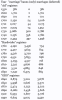
I have also done some minimal searches on the whole collection, and the collection derived from the earlier combined registers: "Suffolk, England, Church of England Baptisms, Marriages and Burials, 1538-1812". I set the year and event type (where relevant) as exact, and got counts for "marriage" and "marriage banns" record types. Now, even an exact search is for text anywhere with the field, so those two counts are for all items and for banns only.
< see next post for table>
The pattern shown here can mostly be explained, though I'm not sure why there are so many marriages in 1730. Recording of banns was rare in the earliest registers, and became more common during the 1700s. Before 1700 the registers were generally very scruffy, and numbers are seriously affected by war and lost registers.
After 1754 Hardwicke's act and the more detailed marriage and banns pro-formas in the new registers did in fact increase the regularity of recording banns. However, that does not show up in those numbers because almost all of the marriages by banns - which are 80-90% of marriages - have been wrongly indexed as banns events. I guess there must be some parishes not affected by this to give the all-Suffolk numbers above, but I have not yet found one.
After the 1837 marriage and registration acts most marriages were still registered in church and both the church and GRO kept registers. The new register layout seems to be enough to avoid the mistranscription seen in the earlier ones. I presume the ones in this collection are the church's ones, and so will not contain civil marriages nor some non-Anglican ones either. That would explain why the number per year does not rise with the population through the 1900s. You can see that for church marriages banns were still recorded in most cases in 1840, though their number does fall slowly.
I also have a look at the other collections launched before and after Suffolk's in August 2025. These were Cambridgeshire & Huntintongdonshire on in July and Doncaster in October and then and Yorkshire (East Riding) in February 2026. All of those seem to be unaffected, though it is perhaps possible that different registers were used (I've not explored that). So I really don't understand how Ancestry managed to get Suffolk so wrong and not notice.
PS: The formatting of my table has get really messed up there. I'm not sure how - when I reopen it for editing it's fine! I've removed it and added in the next post.