• Only registered members can see all the forums - if you've received an invitation to join (it'll be on your My Summary page) please register NOW!

  • If you're looking for the LostCousins site please click the logo in the top left corner - these forums are for existing LostCousins members only.
  • This is the LostCousins Forum. If you were looking for the LostCousins website simply click the logo at the top left.
  • It's easier than ever before to check your entries from the 1881 Census - more details here

Marriage dispensation

  • Thread starter Thread starter At home in NZ
  • Start date Start date
A

At home in NZ

Guest
My great grandparents both had the same last name. They married in 1872, I have found the church register (Westport Ireland) and it indicates they were married under dispensation.

I need some help to work out how they could have been related, this is the relevant part of the register.
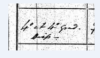
upload_2023-3-16_15-44-49.png
 
Married under dispensation could mean that one was Catholic and the other wasn't. Which column in the register is the image from? it looks like 4 et (and) 4 but what are the dots? the words look like Gr??d. ??isp - maybe Grant. Disp - ?
 
Married under dispensation could mean that one was Catholic and the other wasn't. Which column in the register is the image from? it looks like 4 et (and) 4 but what are the dots? the words look like Gr??d. ??isp - maybe Grant. Disp - ?
They were both Catholic.
The column is headed Impedimentum.
I think it's 4 degrees, not sure what is in between each 4 degrees. From what I've found it appears to be 4 degrees of separation under the law/rules of consanguinity. But, I don't really understand that.
 
I think the “dots” are superscript ‘o’s so it’s quarto, Latin for fourth with et (and) in between followed by grad. which is Latin for degree. Then underneath is Disp. for dispensation. However, I’m not sure what is meant by 4th degree relatives in this context, whether they are counting people or steps, but I think it suggests they are in the same generation.
 
Looking into it further, I think it means both parties have a 4th degree relationship with their nearest common ancestor(s), so 3rd cousins sharing 2x gt grandparent(s).
 
I agree. This article might be of interest. It contains a chart of consanguinity on the third page.
Thanks Helen. I think I've seen that chart before but, confession, I am not good with charts and didn't understand it.

Looking into it further, I think it means both parties have a 4th degree relationship with their nearest common ancestor(s), so 3rd cousins sharing 2x gt grandparent(s).
Thanks Pauline, using this explanation in conjunction with the chart the light dawns.

However I have no real hope of finding out who their grandparents were let alone any further back. All the people I have collaborated with, in respect of Irish ancestry have the same problem because records beyond about 1840 for the area my family was from do not exist.
 
Looking into it further, I think it means both parties have a 4th degree relationship with their nearest common ancestor(s), so 3rd cousins sharing 2x gt grandparent(s).
There were two similar bans, by consanguinity and affinity, both within the fourth degree. I take that to be up to and including a fourth degree relationship between the parties. So I'd guess it's saying they are related to each other in both ways, either at or within the fourth degree. My suspicion is that it just means both relationships are not allowed - since there is a dispensation, the actual degree no longer matters for the register. Hard to know, unless there's a similar example in the register with a closer relationship specified.
 
There were two similar bans, by consanguinity and affinity, both within the fourth degree. I take that to be up to and including a fourth degree relationship between the parties. So I'd guess it's saying they are related to each other in both ways, either at or within the fourth degree. My suspicion is that it just means both relationships are not allowed - since there is a dispensation, the actual degree no longer matters for the register. Hard to know, unless there's a similar example in the register with a closer relationship specified.
I've come to the conclusion that a Catholic priest could be the best person to answer this, preferably an Irish one.
For now, I am using Pauline's explanation.
 
There's a further logical argument: if the impediment was only consanguinity, or only affinity, the entry would need to say which. Something like "4° grad cons" or "4° grad aff". Since it does not say which is, and repeats the "4°", I conclude that both were impediments to this marriage.
 
You may well be right, Stuart, that if both degrees related to consanguinity, we might have expected it to say so. I guess we would need to look at other entries in that particular register to know for sure how that priest did things. From a genealogical point of view, though, I think we can be pretty sure that the couple were third cousins by blood, and possibly also by marriage.

But a lack of surviving records may mean that knowing exactly how they were related won’t help much anyway!
 
4th degree would normally indicate 1st cousins - you count the number of generations from one spouse up to the common ancestor(s), then add the number down to the other spouse. For Catholics it didn't matter whether they were related by blood or by marriage.

EDIT: in this case it shows 4 degrees on each side, which means they were 3rd cousins.
 
Last edited:
Pauline is correct. They were third cousins. I've come across this notation in many Irish records, including those of my2x great parents married in 1836 with the same same surnames. What's exciting it that it tells me It's very likely I had ancestors in the parish a hundred years beforehand
 
But a lack of surviving records may mean that knowing exactly how they were related won’t help much anyway!
Too true.

I was only able to find out who the siblings of the groom were by a process of elimination, using obituary and grave records.
His parents were born in 1805 and 1812 respectively. I have no hope of finding out who their parents were.

I was able to find out lot more about the bride because I am in possession of a handwritten old style family tree that was written for the most part from interviews with the people living in the 'village' where she was born.
Even so, the word of mouth history only goes back to her grandparents born around 1802. Again, I have no hope of finding out who their parents were.

I posted this query in the hope it would help me work out who the relatives were that were causing the impediment but I am still in the dark.

On the web there are what seems like many sites that define the degrees of consanguinity, not all are equal which doesn't help somebody who is confused to start with.

I am not so confused now. Thanks everybody for your input.
 
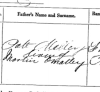
When I started this discussion I had forgotten about this, it is in the Registrar's record of the marriage.
What do you think the word between the father's names is?

upload_2023-3-19_22-33-11.png
 
Is the full entry online? And the entry from the church register too? Deciphering hand writing is easier if there is more to compare it with, and if there’s a second copy. What looks like ‘of’ could just be a final ‘g’.
 
Back