• Only registered members can see all the forums - if you've received an invitation to join (it'll be on your My Summary page) please register NOW!

  • If you're looking for the LostCousins site please click the logo in the top left corner - these forums are for existing LostCousins members only.
  • This is the LostCousins Forum. If you were looking for the LostCousins website simply click the logo at the top left.
  • It's easier than ever before to check your entries from the 1881 Census - more details here

Family in 1881 census twice

bluebeard

LostCousins Member
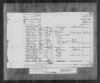
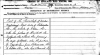
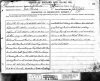
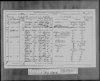
I'm wondering how this happened. The Forster family is in the 1881 census twice, with different addresses and different piece/folio/page numbers, but with identical details (apart from a weird mis-spelling of one child's name). From looking at old maps, the two addresses are very close to each other, and could even be the same street with different names. Also, on one transcription (in findmypast), the youngest child is missing, even though he is clearly on the original. Images and transcriptions are attached. Any explanations welcome.gbc_1881_4362262_00452.jpg gbc_1881_4362263_00803.jpg
 

Attachments

This is not unusual - there could well be more than one entrance to the building. I wrote about a similar example in the newsletter about 10 years ago - on that occasion the entrances were on different streets and the streets were in different enumeration districts.
 
(What are the two streets? Looks like Bottle (or is it Battle?) Hill next to Academy Hill on one, and - very strange, there seems to be tissue paper over it! - something like Pr? Barracks on the other. And are they in Westoe, or Jarrow, or somewhere else?)
Presumably the enumerator copied the household books, duly filled in by the householder, that he had delivered some days earlier. But even if he hadn't realised when delivering them, wouldn't the householder have queried having to fill in two of them?
 
What are the two streets?
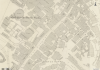
It is Bottle Hill, by Academy Hill, and the other is Pratt's Bank. One says in Westoe, the other in South Shields, but in fact they are both in the Westoe area of South Shields. This map from the 1850s shows Pratt's Bank and Academy Hill, and there is an area called Bottle Bank (!) as well as Bottle House Landing and Bottle Works (no doubt where the head of the household worked as a bottle maker), but no actual Bottle Hill.
upload_2025-9-17_10-27-13.png
 
Ah, the two different transcribers might explain why they didn't notice. I still wonder why the householder didn't comment on having to fill in two booklets, though. Although perhaps they only filled in one, and the transcribers - presumably sharing records - used the same booklet twice, not realising.

(When looking on Google maps today, I didn't find any of the places - presumably the bottle works has disappeared - though I think I did notice Bottle House still. [I used to lodge in South Shields when I worked in Hebburn in 1978-'9 and '82-'3, so know the area somewhat.]
 
Also it looks like two different people have written the two pages
That's because they are different enumeration districts and therefore different enumerators. This would have been obvious if the census references had been quoted in the original enquiry rather than posting the (copyright) images.

At Ancestry you can see the descriptions of the enumeration districts on the first page of each summary book - I'll leave it to you to check the descriptions against the map.
I still wonder why the householder didn't comment on having to fill in two booklets, though. Although perhaps they only filled in one, and the transcribers - presumably sharing records - used the same booklet twice, not realising.
By transcribers you presumably mean the enumerators, as they were responsible for copying the information on the census forms into the enumerator's summary book (which is all that has survived for censuses up to 1901). It's very unlikely that the same form found its way to two different enumerators.
 
Hmm. In that case your suggestion of the building having two entrances as the possible reason for the family appearing in two places … ? Do you think the householder did receive two booklets and filled them both in, without comment?
 
Do you think the householder did receive two booklets and filled them both in, without comment?
There are a wide range of possibilities. For example, perhaps the head of household completed one of the forms, then the second enumerator came round and spoke to his wife, who may have been unaware that her husband had already submitted a return.

Or perhaps they decided that it was simpler to fill in both forms (which would have shown different addresses on the front) than to get into an argument with the enumerators.

Or maybe the enumerators knew about the duplication, but neither was prepared to accept a potential drop in income.
 
At Ancestry you can see the descriptions of the enumeration districts on the first page of each summary book
Unfortunately I don't have a current Ancestry subscription and I can't find those pages anywhere else. I'm sure you used to be able to see them in findmypast.
 
If you look closely at that town plan, there is a dotted boundary line that wiggles its way across the area where this family lived. The next issue on NLS does say that this is for civil parishes, and the census data say one record was in South Shields parish and registration subdistrict, the other in Westoe for both. So you can see how very confusing house addresses were here.
 
That's interesting Stuart. I can also see that the line is marked "Und." or undefined, so even the enumerators may not have known where the boundary was.
 
That's interesting Stuart. I can also see that the line is marked "Und." or undefined, so even the enumerators may not have known where the boundary was.
Parts are marked "F.W.", meaning foot of wall, and the line is hard to see as it's next to the wall. The parts marked "Und" are easier to spot as they are where the line crossed a street or entry.
 
Thanks very much for these images Peter. The second clearly covers the area of both census entries whereas the first seems to be further away altogether. Well it's still a bit of an ongoing mystery, but I shan't lose any sleep over it.
But the supplementary question is, should I input both entries into My Ancestors? (I think the answer is probably yes).
 
Back
Top