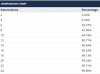
As I said before, the aim of upgrading is to get better resolution.
For example, at 12 markets I have only match, with DC at a genetic distance of 1. At 25 markets DC ios still at a distance of 1, but I also have three matches with a genetic distance of 2 - DP, GC, and SC. On the face of it the latter three are equally close, and I would spend an equal amount of time researching to my connections with them. In practice I'd probably spend more time researching SC, because his surname is the same as mine.
At 37 markers DC and GC are still at 1 and 2 respectively, but DP has disappeared altogether (although he tested 67 markers) and SC now has a genetic distance of 4. This means that I should be focusing on DC and GC (neither of whom has the surname Calver, by the way, though one is quite close). I've also got 3 new matches at a genetic distance of 4.
The problem with Y-DNA is that so few people have tested. Roughly speaking about 1 in 250 of the relevant male population has tested compared to 1 in 20 who have taken autosomal DNA tests. But that's not a realistic comparison because you can only get Y-DNA matches with males who share your direct paternal line, which is only one line out hundreds, thousands, millions, or billions (depending how many generations back).
How far do you have to go back on your direct male line for there to be 250 living males who share that line? If you take the very optimistic view that every male had 2 sons it would take 16 generations, which takes you at least as back to the start of parish registers in 1538, and probably further. Go back another 7 or 8 generations and now you're back before surnames came into common use in England.
So the chances of getting a close match, or any useful match, is pretty small - and that's why in many cases it's better to take the Ancestry test.