I was looking at a distant relative in the 1939 Register and was somewhat amused by the Ancestry transcription of his occupation: "Retired Civil Scroat".
Sounds to me like a contradiction in terms!
(The actual register has 'Retired civil servant'.)
I came across an extract from a London Trade Directrory for 1845 trying to find an ancestor James Crouch in London, offering a most unusual trade service
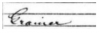
I know my James Crouch (1821-1889) shows an occupation of 'Painter' and at another time 'Grainer'
(simulating wood grain I believe)
He lived throughout in Bethnal Green so maybe an entirely different James Crouch. But that aside, in what form do you suppose one would offer warm and cold baths as a Trade rather than (say) as Public baths? That does intrigue me.
You will no doubt recall from my newsletter that public baths only came into being after legislation was passed in 1844, and only proliferated after a second act in 1850.
My guess is that a warm bath incorporated a heater, whereas a cold bath didn't. This article (found via Google) doesn't answer your specific question, but it provides a lot of background information that may help to narrow down the answer.
This site uses cookies to help personalise content, tailor your experience and to keep you logged in if you register.
By continuing to use this site, you are consenting to our use of cookies.